/Now booking · 2 to 3 partners at a time
Every team hit its number. The customer still left.
Your product, docs, support, and community each work. The route between them doesn’t. In five days, with zero internal access, I walk it like a new customer and hand you a ranked list: what to delete, what to make deterministic, what to give an agent, and what stays human.
- $192K+ off cost-to-serve per year
- 4.96% → 8.8% community-assisted resolution in six months
- −25% repeat questions after the rebuild
From full engagements I helped design and run.
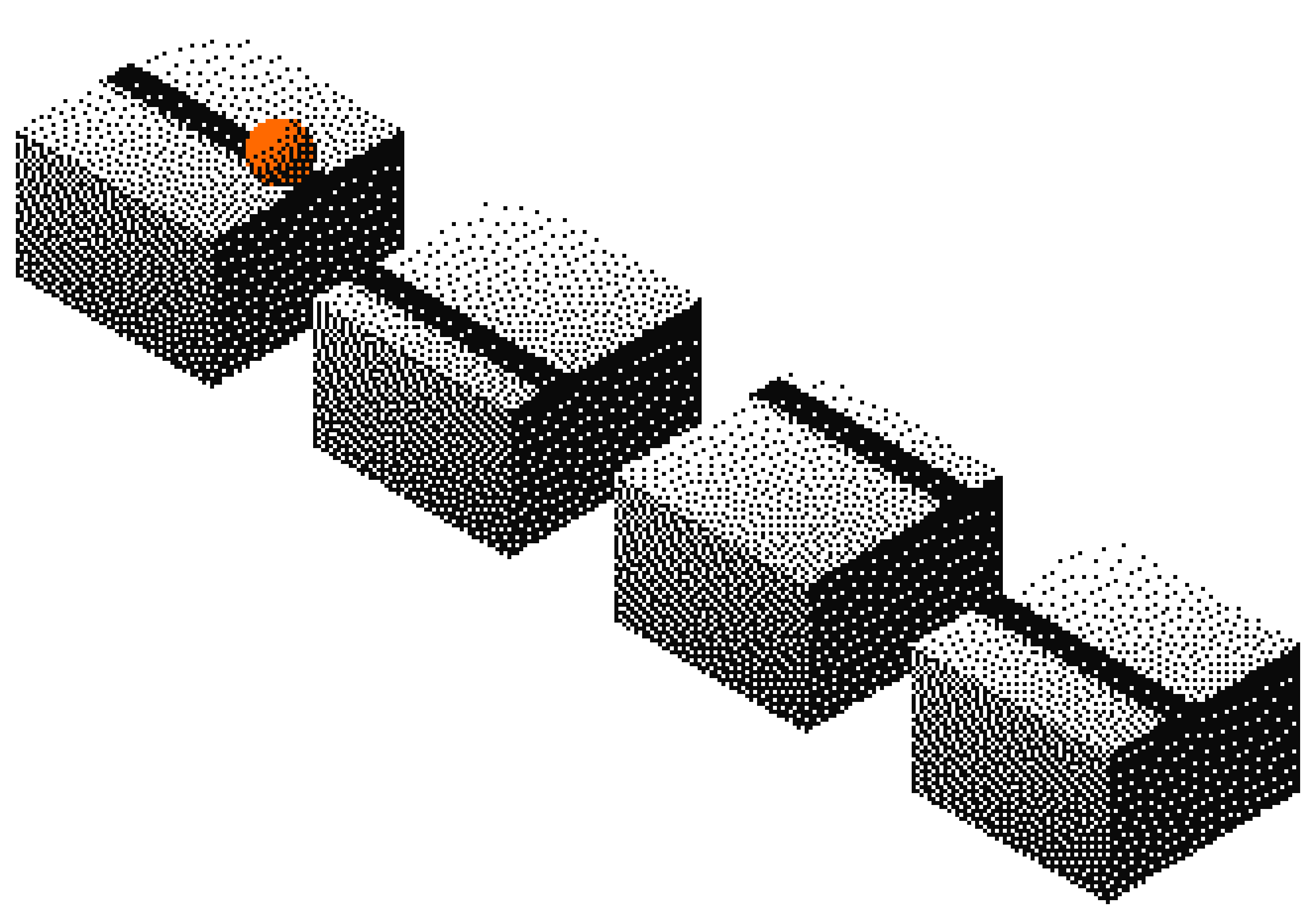
A seam nobody owns. (6)
/Exhibit A · What each team reports
| /Team | /What they report | /What the customer got |
|---|---|---|
| Support | Deflection up 12% | The bot closed the chat. SSO still wasn't set up. |
| Docs | Page views up | The SSO page never mentions the fix. |
| Community | Engagement up | The fix was posted eight months ago, with screenshots. Nobody carried it. |
| AI | 70% containment | Contained. Not correct. |
| Product | SSO shipped on time | The screen they got stuck on links nowhere. |
| Customer | — | Quietly stopped logging in. |
Illustrative. You’ve probably seen the real one. It looks the same for a customer, a researcher, or an agent.
/Why now
Your next customer is an agent. Is your path legible to it?
Same path. Same dead ends. Except an agent can’t complain, can’t find the community thread, and can’t ask for a human. It just stops. The review walks agent paths too.
$ agent.run("set up SSO for my team")
→ search help center ......... 3 results
→ open "SSO setup" ........... fix not mentioned
→ chat with support bot ...... contained
→ ask for a human ............ no route
✕ task abandoned Can you finish this sentence?
Most teams can’t, because every dashboard says it’s fine. Finding out is the review.
When someone tries to
set up SSO for their team ,
they end up
blank.
Next you add your email. You stay on this page.
-
/01 · Within 1 business day
I write back.
I look at your product. You get a yes and what I need, or an honest no.
-
/02 · Days 1–4
I walk the path.
Not sure where to start? No problem. I begin where your users begin and follow what they came for, with no internal access or stakeholder interviews needed.
-
/03 · Day 5
You get the review.
Every seam, every step sorted, and a ranked plan for what to fix first.
Ecosystem Review
/One-time · 5 business days · no internal access required
Not just what is broken. What needs to change.
The main path and its branches, each mapped to a job story and the two metrics that actually measure it (completion and return), next to what your teams track today.
A recorded walkthrough of the real path next to the documented one, with a routing map: where customers translate, and what the system gave them instead.
Intent gaps, translation-tax hotspots, and dead feedback loops, traced to the seam each falls through.
Every step sorted: delete, deterministic, agentic, or human. Ranked by how far each moves the numbers.
/Proof
What I find, and what fixing it does.
/See a real one · public, unpaid, on products I use
Three pillars. Zero internal access. (3)
-
/01 Intent
Intent: walk the real path, not the documented one.
Your journey map says six steps. Your customers take fourteen. I walk the real one as a newcomer and mark every place the person is translating into your terms. That’s the translation tax. I name the main path and its branches from what customers were trying to do, and define the two numbers that measure whether it worked: Did they get what they came for? Did they come back? Your team metrics stay as guardrails.
The question: Is the system meeting intent, or is the person translating?
-
/02 Community
Community: follow the answer back.
Customers ask in your forum, in Slack, in a ticket, on Reddit. Some get an answer. Some build a workaround. I map where each one goes, and whether it loops back to the people who can fix the product, the docs, or the bot. Every workaround is a request with evidence attached. Most never leave the thread.
The question: When a customer solves it themselves, does anyone find out?
-
/03 Trust
Trust: earn it at every handoff. Every step has to prove itself.
Trust is lost in the seams between teams. Every step on the real path has to earn its keep, and goes in one of four buckets. Delete: it shouldn’t exist. Deterministic: no judgment, just plain code. Agentic: judgment, backed by your knowledge. Human: anything risky, or where trust is on the line. The time is lost between steps, in the seams nobody owns. That’s where most deletions hide, and where Shadow CX lives.
[D] Delete [T] Deterministic [A] Agentic [H] HumanThe question: Should this step exist at all?
Is this you?
For you if
- Every team's dashboard is green, and customers still drift.
- Support, docs, community, and AI have different owners. The seams between them have none.
- Repeat questions, escalations, or AI answer quality keep getting worse and nobody can say why.
- The experience runs on Shadow CX: spreadsheets, Slack favors, and the one person who knows.
Not for you if
- You're pre-PMF. There's no ecosystem to review yet.
- Nobody can sign up without talking to sales. The review walks the path a new customer takes, so there has to be one.
- You want a UX audit or a ticket-deflection report. This is systems and seams, not screens.
- You want the fixes built inside the review. It ends at the plan.
Asked before you ask. (7)
Why don't you need access?
Because the people you want to reach don't have it either. I sign up like any newcomer would. No admin seats, no internal tools. A dead end I can't reach without internal access is itself a finding.
Can't we just add AI?
AI on a broken path makes the broken path faster. Sort the steps first: some get deleted, some go deterministic, some go agentic, some stay human. Then the agents get built inside the tools you already use. That's the build.
Do you implement the fixes?
Not in the review. It ends at the plan. The build is forward-deployed: I work inside your stack, baseline the numbers first, and we re-measure at 3 and 6 months.
Isn't this just another metrics framework?
It's fewer metrics. Your teams keep theirs as guardrails. The review adds the two your customers would pick and ranks everything against them.
Is this your full-time job?
My full-time job is doing this at Tenable, as Principal, Agentic AI Ecosystem Specialist. The review is how I do it for a few others. That's why I take 2 to 3 at a time.
Is it confidential?
Yes. Mutual NDAs are fine, and paid reviews are never published unless you ask.
How does payment work?
All upfront through a Stripe link when you book. Card or bank transfer.
The words I use (6)
- The two numbers
- Two numbers per path: one pair for the main path, one pair for each branch. Tied to whether customers come back. Everything else is a guardrail.
- Intent gap
- The distance between what a customer is trying to do and what the system gives them.
- Translation tax
- The extra work a customer does to translate their need into your internal process. A cost to them, and a signal of what to fix.
- Seam
- The handoff between two surfaces. Teams own surfaces. Almost nobody owns seams.
- Shadow CX
- The hidden spreadsheets, tribal knowledge, Slack favors, and one-off automations holding the experience together when the system stalls, until they don't. Why it matters →
- The drift
- Customers who hit friction and quietly do less instead of complaining.
2 to 3 reviews at a time.
Five days. Zero internal access. A ranked plan.
Ecosystem Review · $1,500 · 5 business days · no internal access required